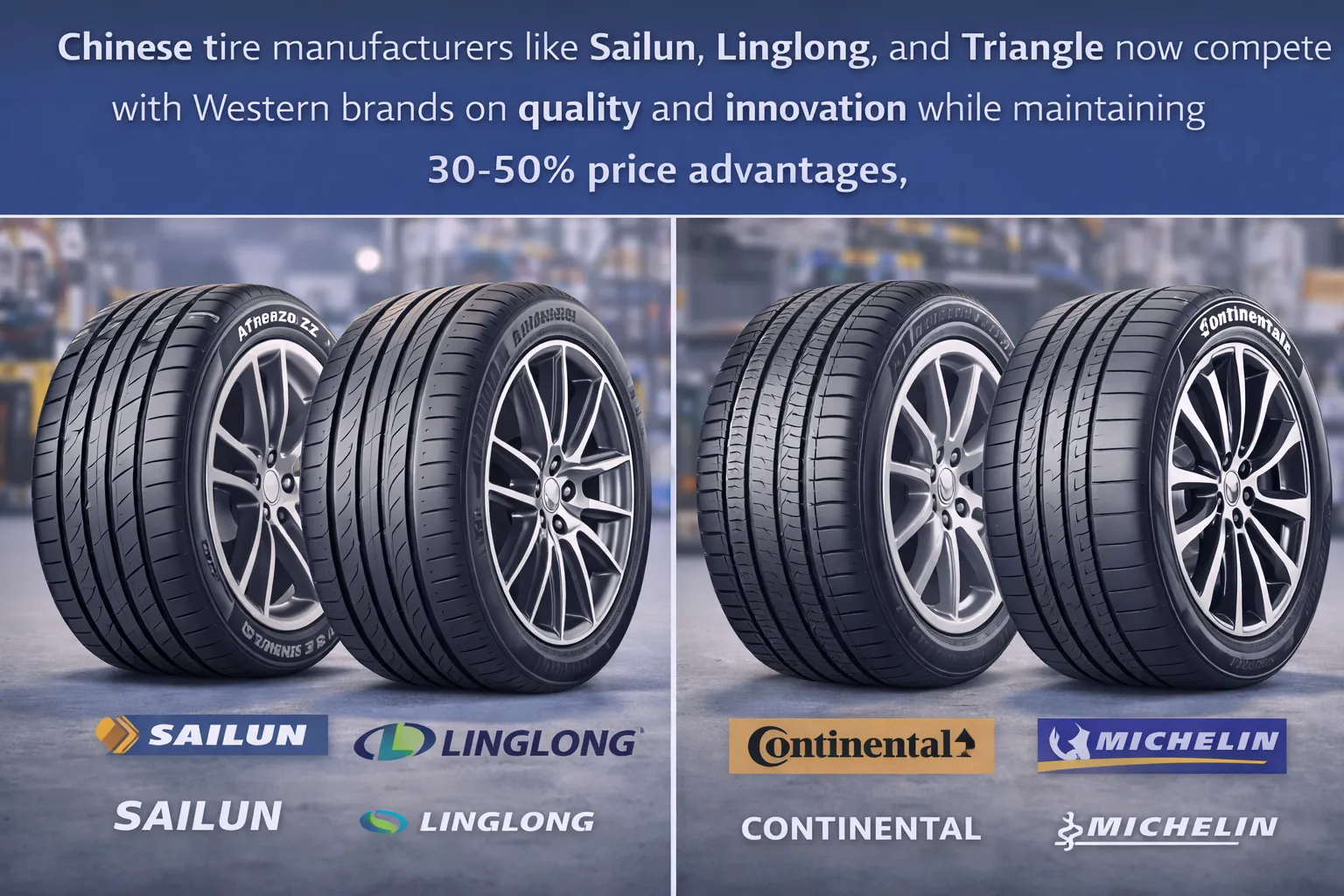
The Evolution of Chinese Tire Manufacturing and the Global Market Shift
The global tire industry is experiencing a transformative moment, and Chinese tire manufacturers are at the center of this revolution. Once dismissed as low-cost competitors, brands like Zhongce Rubber, Sailun Group, Linglong Tire, and Triangle Tyre have become architects of innovation, reshaping perceptions of quality and value in the global market. In 2024, Chinese tire production reached 1.19 billion units-a milestone representing nearly half of the world’s total tire output and marking a remarkable 9.2% year-on-year increase.
The narrative has fundamentally shifted. Chinese tire brands are no longer fighting for recognition based on price alone; they are winning OEM partnerships with global automakers like Volkswagen, Stellantis, Renault, and Ford. They are establishing advanced manufacturing facilities across Europe, Asia, and North America. They are pioneering EV-specific tire technologies at a time when the global auto industry is undergoing its most significant transformation in over a century.
This comprehensive guide explores the leading Chinese tire manufacturers, their competitive advantages, technological innovations, and strategic positioning in markets worth over $54 billion annually-with projections to exceed $102 billion by 2030. Whether you’re a fleet manager, distributor, automotive professional, or consumer seeking to understand the changing tire landscape, this guide provides actionable intelligence on the brands shaping the industry’s future.
Understanding the Scale: China’s Dominance in Global Tire Manufacturing
Production and Export Leadership
The numbers tell a compelling story. In 2024, China’s rubber tire production totaled 1.18694 billion units, up 9.2% year-over-year, establishing a new historical record. This staggering volume represents more than half of global tire production-a level of scale that only China can sustain given its integrated manufacturing ecosystem, skilled labor force, and supply chain efficiencies.
Equally impressive is China’s export performance. The country exported 680.57 million tires in 2024, an increase of 10.5% compared to 2023, with a total export value of 158.3 billion yuan (approximately $22.3 billion USD). When measured by product classification, rubber tires rank as China’s 29th most-exported product globally, underscoring their significance in the country’s trade portfolio alongside semiconductors, machinery, and consumer electronics.
Breaking down the export composition reveals strategic market focus. New pneumatic rubber tires-the category most relevant to automotive applications-accounted for 8.99 million tons of exports, up 4.9% year-over-year, valued at 158.3 billion yuan. Semi-steel radial tires, predominantly used in passenger vehicles, saw particularly robust demand, with exports reaching 287 million units and experiencing sustained 20% year-on-year growth. This combination of volume and value growth demonstrates that Chinese manufacturers are not simply exporting more tires-they’re selling more sophisticated, higher-margin products.
Global Market Valuation and Growth Projections
China’s domestic tire market alone was valued at USD 54.81 billion in 2024, making it one of the largest tire markets globally. Research from multiple authoritative sources projects this market will reach USD 102.4 billion by 2030, representing a compound annual growth rate (CAGR) of approximately 10.98%-significantly outpacing mature tire markets in North America and Europe.
This growth is driven by three interconnected trends: rising vehicle ownership in tier-2 and tier-3 Chinese cities, explosive EV adoption (with 30.2% global market share in 2024 and a 38.8% year-over-year surge), and the replacement tire market, which benefits from an aging fleet of vehicles requiring maintenance and upgrades.
The Rise of Chinese Tire Manufacturers: Strategic Drivers and Market Dynamics
Investment in R&D and Technology Innovation
Chinese tire manufacturers have fundamentally restructured their business models around innovation. Leading companies now operate state-of-the-art R&D centers not only in China but also in international locations, focusing on material science, tire design optimization, and advanced manufacturing processes.
The results are tangible: Chinese brands now develop proprietary tread patterns engineered for optimal grip and reduced road noise, advanced rubber compounds enhancing both durability and fuel efficiency, and sophisticated tire constructions improving safety across diverse driving conditions. Many Chinese tire manufacturers have also established dedicated EV tire divisions, recognizing that electric vehicles demand fundamentally different tire specifications than traditional internal combustion engines-specifically lower rolling resistance to maximize range, reinforced sidewalls to handle the weight of battery packs, and optimized tread patterns for near-silent operation.
Companies like Sailun Group, for example, have invested heavily in EV-specific tire technologies and AI-driven R&D processes. Linglong Tire operates a digitalized cloud platform at its Changchun manufacturing facility to enhance production efficiency and quality control. These investments position Chinese manufacturers not as followers but as innovators defining the future of the tire industry.
Manufacturing Capacity and Overseas Expansion
To serve growing global demand while mitigating tariff barriers and logistical constraints, Chinese tire manufacturers have strategically expanded their overseas production footprint. Major facilities now operate in Vietnam, Thailand, Serbia, and Cambodia. This “glocalization” strategy serves multiple objectives: reducing lead times for key markets, lowering transportation costs, adapting products to regional preferences, and circumventing trade tariffs that increasingly target Chinese-origin goods.
As of late 2024, approximately 50 major tire manufacturing projects were either under construction or in planning stages across China, representing over 100 billion yuan in capital investment and projected production capacity exceeding 200 million units. Additionally, Chinese tire companies committed over 30 billion yuan to overseas factory development in 2024 alone, signaling confidence in sustained global demand and a commitment to becoming truly multinational enterprises.
The strategic placement of these facilities is deliberate. Linglong Tire’s Serbia plant, for example, positions the company to serve European OEM customers while meeting EU labeling and environmental standards. Sailun’s Vietnam operations target Southeast Asian markets and provide a manufacturing bridge for exports to North America. This geographic diversification reduces vulnerability to any single market’s regulatory changes or economic downturns.
Strong OEM Partnerships and Original Equipment Supply
A critical indicator of tire quality and manufacturer reliability is the ability to secure original equipment (OE) contracts with major automotive producers. Chinese tire brands have increasingly succeeded in this demanding arena, validating their product quality and performance capabilities.
Linglong Tire stands as a prime example: the company supplies tires to eight of the top ten global automotive manufacturers, including partnerships with Volkswagen, Stellantis, Renault, and Ford. These are not contracts for budget segments but for mainstream and premium vehicle lines, where automakers demand uncompromising quality and performance. Giti Tire similarly partners with eight of the top ten passenger car brands operating in Beijing, one of China’s most competitive automotive markets.
The significance of OE partnerships cannot be overstated. When BMW, Volkswagen, or Tesla specifies your tires as original equipment, they are making a public statement about quality, durability, and performance. These partnerships expose Chinese brands to millions of consumers globally who might otherwise remain unaware of their capabilities. They also provide manufacturing expertise and technical feedback that accelerates product improvement cycles.
Competitive Pricing Without Sacrificing Quality
The value proposition offered by Chinese tire brands represents a fundamental economic shift in the industry. These manufacturers have achieved a balance that Western and Japanese competitors struggle to replicate: delivering high-quality, technologically sophisticated products at prices reflecting efficient manufacturing, scale, and optimized supply chain management.
This is not a race to the bottom. Chinese tire manufacturers are not competing primarily on price; they’re competing on value-the ratio of performance and durability to cost. A Chinese tire brand may cost 20-40% less than a comparable Michelin or Continental product while delivering 90-95% of the performance. For fleet operators managing thousands of vehicles, for consumers in price-sensitive markets, and for consumers in developed markets prioritizing value over prestige, this equation proves compelling.
The strategy reflects both the advantages of Chinese manufacturing and the deliberate positioning choices of leading companies. Labor costs in China, while rising, remain lower than in Japan or Western Europe. Manufacturing automation has reduced dependency on labor while improving consistency. The integration of supply chains-rubber, steel, textile, and chemical suppliers all concentrated in regions like Shandong Province-reduces logistics costs. All these efficiencies flow through to retail prices, making Chinese tires accessible to a broader market.
Leading Chinese Tire Manufacturers: In-Depth Profiles and Market Positions
Zhongce Rubber Group (ZC Rubber Group): China’s Largest Manufacturer
Zhongce Rubber Group stands as the titan of China’s tire industry, commanding an unparalleled market position through scale, diversification, and financial strength. In 2024, the company achieved sales revenue of 34.311 billion yuan, representing 8.5% growth compared to 2023 and consolidating its position as the clear market leader.
ZC Rubber operates under an expansive portfolio that includes several distinct brand lines: Westlake (targeting value-conscious consumers), Chaoyang (emphasizing durability and long tread life), Goodride (focusing on commercial applications), and others. This multi-brand strategy allows the company to serve distinct market segments without brand dilution. While Westlake tires compete on price, Goodride tires target fleet operators and commercial users where reliability is non-negotiable.
The company manufactures across the complete tire spectrum: passenger car tires (PCR), truck and bus radial tires (TBR), and off-the-road tires (OTR) for mining, construction, and agricultural applications. This vertical diversity provides stability, as weakness in any single segment can be offset by strength in others. ZC Rubber’s extensive global distribution network reaches over 160 countries, making it one of the few truly multinational tire companies with significant presence in developed markets, emerging markets, and developing regions.
ZC Rubber’s strength is also reflected in its vertical integration. The company controls raw material sourcing, manufacturing, logistics, and distribution channels, reducing dependency on external suppliers and allowing for rapid quality improvements and cost optimizations. This integration is particularly valuable in volatile commodity markets, where control over rubber and steel costs directly impacts profitability.
Sailun Group: The Rising Premium Chinese Brand
Sailun Group has ascended with remarkable speed, establishing itself as the premium Chinese tire brand and breaking into the global top 10 for the first time in 2024. With 2024 revenue of 31.8 billion yuan (up from 21.5 billion in 2023-a 48% increase in just two years), Sailun represents the new generation of Chinese tire manufacturers focused on quality, innovation, and international market share.
The company produced 74.8 million tires in 2024, with approximately 75.9% sold in overseas markets-a higher export ratio than most competitors and reflecting Sailun’s deliberate strategy to establish itself as a global rather than domestic brand. The company has been particularly aggressive in developing advanced tire technologies. Sailun’s “EcoPoint3” technology, for example, represents a proprietary approach to reducing rolling resistance while maintaining grip and durability, directly addressing the needs of both fuel-conscious conventional vehicle owners and EV buyers maximizing range.
Sailun has made strategic investments in overseas manufacturing, including facilities in Vietnam and plans for a major joint venture in Mexico focused on semi-steel tire production (representing a $240 million investment). This geographic expansion positions Sailun to serve North American and European markets from local production hubs, reducing tariff exposure while improving lead times.
The company has also prioritized OEM partnerships. Sailun supplies tires to major automakers globally, providing both original equipment and aftermarket support. This dual-channel approach-OEM supply plus robust aftermarket distribution-creates customer touchpoints that build brand awareness and loyalty.
Linglong Tire: European Ambitions and OEM Leadership
Shandong Linglong Tyre Co., Ltd. achieved 2024 revenue of 22.058 billion yuan, up 9.39% year-over-year, with net profit attributable to the parent company reaching 1.752 billion yuan-a 26.01% increase demonstrating strong operational performance despite industry headwinds. The company sold 85.4 million tire units in 2024, up 9.57% compared to 2023.
Linglong’s distinguishing characteristic is its aggressive European expansion and the quality of its OEM partnerships. The company’s Serbia manufacturing plant, which began production several years ago, has become a cornerstone of its European strategy. The facility uses advanced automation and robotics, positioning Linglong as a high-quality supplier for European automotive manufacturers. With annual production capacity of 13.62 million tires at its Serbia facility, Linglong can serve European OEM customers while meeting stringent EU environmental and quality standards.
In 2024, Linglong achieved a milestone: eight of the world’s top ten automotive manufacturers now equip their vehicles with Linglong tires. This OEM penetration validates the company’s quality credentials and provides exposure to millions of premium vehicle buyers. The company’s European strategy is particularly sophisticated, combining OEM partnerships with targeted dealer networks and sports sponsorships to build brand awareness in markets traditionally dominated by Michelin, Continental, and Bridgestone.
Linglong has also been innovative in the EV tire space, developing specialized products for electric vehicles with optimized noise reduction (critical for quieter EV powertrains) and lower rolling resistance (maximizing battery range). The company’s digital transformation initiatives, including AI-driven R&D and cloud-based production management, position it as a technology-forward manufacturer rather than a commodity producer.
Triangle Tyre: Commercial Vehicle Leadership and Global Reach
Triangle Tyre represents a different positioning within the Chinese tire landscape: leadership in commercial vehicle applications (truck, bus, and off-road tires) combined with growing presence in passenger car segments. The company achieved 2024 revenue of 10.16 billion yuan, and while this represented a 2.55% decline from 2023, the company’s market position remains formidable.
Triangle’s historical strength lies in durability and load-carrying capacity-attributes essential for commercial fleet operators, mining companies, and construction firms. Triangle tires are engineered for longevity under demanding conditions, making them a preferred supplier for logistics companies and heavy-duty applications where tire performance directly impacts operational costs and safety.
The company has expanded into passenger car tires while maintaining its commercial focus, creating a product portfolio appealing to different market segments. Triangle’s overseas expansion has been steady, with growing market share in North America, Europe, the Middle East, and Africa. Despite facing margin pressures from raw material cost volatility (reflected in 2024’s revenue decline), Triangle continues to invest in R&D and quality improvements to maintain competitive positioning.
Double Coin Holdings (Double Coin Tire, Warrior Brand): Commercial Fleet Specialist
Double Coin Holdings, particularly through its Warrior brand, has established a reputation as a specialist in commercial tire applications. The company manufactures comprehensive ranges of truck and bus radial (TBR) tires designed for fleet operators prioritizing durability, long mileage, and retreadability-attributes that directly reduce total cost of ownership for commercial users.
While specific 2024 revenue figures show Double Coin facing financial headwinds (the company reported significant losses in 2024, with projections suggesting losses between 285-385 million yuan), its market position in commercial applications remains substantial. The company’s emphasis on robust construction and compounds optimized for extended mileage makes Double Coin tires particularly attractive to long-haul trucking operations, bus fleets, and logistics companies operating in price-sensitive markets.
Double Coin’s strategic focus on cost-effective commercial solutions, combined with its extensive distribution network, ensures continued relevance despite profitability challenges. The company is actively restructuring, including the sale of some operations to focus on higher-margin products and expanding manufacturing capacity in markets like Cambodia.
Aeolus Tire: ChemChina-Backed Growth and Innovation
Aeolus Tire, part of the China National Chemical Corporation (ChemChina), achieved 2024 revenue of 6.71 billion yuan, representing a 16.89% year-over-year increase-one of the strongest growth rates among major Chinese tire manufacturers. The company produces tires across a broad spectrum: passenger cars, trucks, buses, agricultural machinery, and industrial vehicles.
Aeolus benefits from being part of ChemChina, one of China’s largest state-owned enterprises, providing access to R&D resources, capital, and supply chain advantages. The company has focused on technological innovation to enhance performance characteristics including grip, wear resistance, and fuel efficiency. Notably, Aeolus has secured partnership agreements with major automakers such as Dongfeng Motor, supplying branded tires for Dongfeng’s electric SUVs-a significant validation of product quality and performance.
The company’s growth trajectory reflects broader industry trends: diversification into EV tire production, investment in overseas market expansion, and emphasis on quality improvement. Despite facing sector-wide challenges (including raw material price volatility and intensifying competition), Aeolus’ growth rate outpaces many competitors, positioning it as a growth story within the Chinese tire industry.
Guizhou Tire: Off-Road Tire Specialist and Niche Leader
Guizhou Tire occupies a specialized position as a leader in off-the-road (OTR) tire production serving industries like mining, construction, port operations, and agriculture. The company manufactures large-format, high-durability tires designed for extreme conditions and heavy loads-applications where tire performance directly impacts operational safety and efficiency.
While less recognized internationally than passenger car tire specialists, Guizhou Tire commands significant respect within the commercial and industrial sectors. The company’s expertise in producing resilient tires for extreme applications makes it a critical supplier for industries dependent on heavy equipment. This specialization provides stability, as demand for OTR tires is driven by construction, mining, and agricultural investment cycles less directly tied to consumer automotive trends.
Evaluating Chinese Tires: A Framework for Informed Selection
Understanding Tire Types and Applications
Chinese tire manufacturers offer comprehensive product ranges addressing every vehicle segment and driving condition. Understanding these categories is essential for selecting appropriate products:
Passenger Car Tires (PCR) are engineered for sedans, hatchbacks, and coupes, prioritizing comfort, fuel efficiency, and all-season traction. Leading Chinese manufacturers like Sailun and Linglong offer PCR products comparable in performance to equivalent Michelin or Continental products at substantially lower prices.
SUV/Crossover Tires feature more robust construction to accommodate heavier vehicle weights while offering a balance of on-road comfort and light off-road capability. Chinese brands excel in this category, offering good value without compromising the structural integrity required for SUV applications.
Light Truck (LT) Tires are built for pickup trucks and vans, designed for heavier payloads and more demanding use with reinforced sidewalls. Chinese manufacturers like ZC Rubber produce competitive LT tires for both domestic Chinese markets and exports to developing nations.
Performance Tires focus on sports cars and performance-oriented vehicles, emphasizing enhanced grip, responsiveness, and high-speed capability. While Chinese brands haven’t yet dominated the ultra-premium performance segment, companies like Sailun are advancing capabilities in this category.
All-Season Tires represent the largest category globally, designed to provide reliable performance across wide temperature and condition ranges (excluding extreme winter weather). Chinese manufacturers dominate this segment due to cost-effectiveness and acceptable performance for mainstream consumers.
Winter Tires are specialized for snow, ice, and cold conditions with proprietary tread compounds and patterns optimizing grip at low temperatures. Chinese manufacturers produce winter tires ranging from budget to mid-premium tiers, with strong performance in tests conducted across Asian and European markets.
Commercial Vehicle Tires include products for trucks, buses, and heavy-duty applications, focusing on durability, load capacity, and longevity under demanding conditions. Chinese manufacturers like Triangle and Double Coin are global leaders in this category.
Deciphering Performance Metrics and Specifications
Understanding tire markings is essential for informed selection:
Tire Size Designation (e.g., P215/65R16) contains critical information: “P” indicates passenger vehicle use, “215” is tire width in millimeters, “65” is the aspect ratio (sidewall height as a percentage of width), “R” denotes radial construction, and “16” is wheel diameter in inches.
Load Index is a numerical code indicating maximum weight capacity. Vehicle manufacturers specify minimum load index requirements-selecting tires below this specification creates safety risks and potential liability.
Speed Rating (H, V, W, Y, etc.) indicates maximum safe speed under rated load. Higher speed ratings correlate with better handling characteristics and performance, though they may increase tire cost.
Treadwear Rating (UTQG) indicates relative tread life, with higher numbers suggesting longer durability. This manufacturer-conducted test should be compared within categories; a higher-tier Chinese brand may have higher treadwear than a lower-tier global brand.
Traction Rating (AA through C) indicates wet braking performance. AA represents superior stopping ability, important in safety-critical applications.
Temperature Rating (A, B, or C) indicates heat resistance and performance under sustained high-speed driving.
Tread Pattern Design directly impacts grip, water dispersal, noise levels, and braking. Symmetric patterns offer consistent wear; asymmetric patterns optimize different characteristics on inner and outer halves; directional patterns excel at water evacuation but require specific rotational direction.
Quality Assurance and International Certifications
Reputable Chinese tire manufacturers adhere to international quality standards. Essential certifications include:
DOT (Department of Transportation) ensures compliance with U.S. safety standards and indicates testing for durability, performance, and safety.
ECE (Economic Commission for Europe) confirms compliance with European safety and environmental standards, including rolling resistance efficiency and external rolling noise.
ISO/TS 16949 represents a quality management standard for automotive suppliers, signifying robust manufacturing processes and continuous improvement commitments.
CCC Certification (required in China) indicates compliance with mandatory certification requirements for automotive products sold domestically.
SmartWay Certification (applicable for commercial tires) demonstrates environmental performance and efficiency recognized by major logistics operators.
These certifications provide baseline assurance of manufacturing rigor, quality control, and safety-regardless of tire origin. Major Chinese manufacturers comply with all relevant standards for their target markets, providing confidence comparable to Western brands.
Warranty, After-Sales Support, and Availability
Comprehensive warranty coverage and accessible after-sales support differentiate quality manufacturers from competitors cutting corners. Premium Chinese tire brands offer:
- Defect Warranties covering manufacturing flaws (typically 3-5 years or unlimited miles)
- Mileage Guarantees promising minimum tread life (often 40,000-80,000 miles depending on tire category)
- Dealer Network Coverage ensuring access to replacement and repair services globally
- Roadside Assistance for eligible customers experiencing tire-related failures
Brands like Sailun, Linglong, and Triangle maintain global distribution networks ensuring availability in most countries. Smaller or budget-focused Chinese brands may have limited warranty support and sparse dealer networks-factors to evaluate before purchase.
Performance Comparison: Closing the Quality Gap with Global Giants
Direct Performance Comparisons with Michelin, Bridgestone, Goodyear, Continental, and Hankook
Independent testing increasingly reveals that the performance gap between leading Chinese tire brands and established global manufacturers has narrowed significantly. In everyday driving conditions-commuting, moderate highway speeds, and varied weather-premium Chinese tires (Sailun, Linglong, Triangle high-tier lines) perform comparably to Michelin or Continental mid-tier products.
In laboratory tests, some Chinese tires achieve equivalent or superior performance in specific metrics: rolling resistance (affecting fuel efficiency), wet grip on highway speeds, and tread life. The differences become apparent at performance extremes: motorsport applications, sustained high-speed driving in extreme conditions, or specialized applications where decades of patent-protected innovation provide advantages.
The economic reality is compelling: for standard passenger cars, SUVs, and commercial vehicles, the difference in everyday driving performance between a premium Chinese tire and a Michelin tire is negligible-often measured in percentages rather than qualitative improvements. The price difference, however, is substantial: 30-50% savings on Chinese brands for equivalent performance classifications.
Understanding Product Tiers and Positioning
It’s critical to distinguish between different tiers within Chinese tire manufacturing. While budget-segment Chinese tires exist (offering basic safety and durability), leading companies actively compete in premium tiers:
- Value Segment (Budget-focused): Affordable pricing for cost-conscious consumers or high-volume fleet operators. Still engineered to meet safety standards but with fewer premium features.
- Mid-Premium Segment (Competitive with global mid-tier): This is where leading Chinese brands excel. Sailun’s premium lines, for example, offer performance and features comparable to Michelin’s mid-range products at 25-35% lower cost.
- Ultra-Premium Segment: Michelin, Continental, and Bridgestone continue to dominate ultra-high-performance categories through decades of motorsport-derived technology, though Chinese brands are advancing rapidly.
The strategic positioning of companies like Sailun focuses on the mid-premium to premium segments, where value considerations matter and where Chinese manufacturers’ cost advantages translate into compelling product value rather than poor quality.
The Critical Role of Professional Installation and Maintenance
Tire selection represents only part of the equation. Professional installation, proper wheel alignment, regular pressure maintenance, and periodic rotation are essential for achieving maximum tire lifespan and performance-regardless of brand or origin.
Incorrect tire pressure reduces lifespan by 10-30%, increases rolling resistance (raising fuel costs), and affects handling and safety. Misalignment causes premature wear and compromises vehicle control. Professional installation ensures proper bead seating, balancing, and torque specifications. When purchasing Chinese tires, ensure your chosen dealer is knowledgeable about the brand and commits to professional installation practices.
This is particularly important for consumers in developing markets where informal tire dealers may cut corners. Investing in professional service-even if slightly more expensive-ensures you realize the full value of your tire purchase.
Continuous Innovation Closing Performance Gaps
The tire industry is characterized by relentless innovation, and Chinese manufacturers are increasingly driving this evolution. R&D investments in fuel efficiency (rolling resistance reduction), EV-specific technologies, and sustainable materials ensure that performance gaps narrow annually.
Chinese manufacturers are developing proprietary compounds using advanced chemistry, exploring alternative materials including recycled rubber and bio-based components, and implementing AI-driven design optimization. These innovations aren’t just improving products-they’re reshaping the competitive landscape, often bringing technologies to market faster and at lower cost than established competitors.
Market Trends and Future Outlook for Chinese Tire Brands
The EV Tire Revolution: Specialized Technologies for Electric Vehicles
The global automotive industry’s pivot toward electric vehicles represents the most significant opportunity and challenge for tire manufacturers. EVs fundamentally differ from internal combustion vehicles in ways affecting tire requirements:
- Higher Vehicle Weight: Battery packs add 800-1200 lbs to vehicle weight, requiring stronger sidewalls and reinforced construction
- Instant Torque: Electric motors deliver maximum torque immediately, demanding tires with superior grip and load distribution
- Range Sensitivity: Rolling resistance directly impacts driving range; every 10% reduction in rolling resistance extends range by 20-30 miles on a full charge
- Acoustic Requirements: EV cabins are quieter, making tire noise more apparent; specialized designs reduce road noise significantly
China’s EV sector achieved a 30.2% global market share in 2024 with a 38.8% year-over-year surge, with cumulative NEV sales hitting 9.37 million units. This massive market is driving demand for specialized EV tires, and Chinese manufacturers are responding with sophisticated products.
Sailun, Linglong, Aeolus, and others have launched dedicated EV tire lines featuring lower rolling resistance, optimized load distribution for heavier vehicles, and proprietary noise-reduction technologies. The Automotive Tire Market in China alone is projected to grow at a robust 10.43% CAGR from 2025 to 2035, with EV-specific tire demand as a primary growth driver.
As global automakers accelerate EV production-with EVs projected to reach 50%+ of new car sales in developed markets by 2030-tire manufacturers developing superior EV technologies will capture disproportionate market share. Chinese manufacturers’ ability to innovate rapidly and scale production positions them to capture a significant portion of this opportunity.
Sustainability and Eco-Friendly Manufacturing
Environmental consciousness is reshaping customer choices and regulatory frameworks globally. Chinese tire manufacturers are responding by prioritizing sustainable practices:
- Lower Rolling Resistance Tires improving fuel economy for conventional vehicles and extending range for EVs
- Recycled Materials incorporating recycled rubber and sustainable polymers into tire compositions
- Bio-Based Compounds exploring plant-derived materials to reduce petroleum dependency
- Manufacturing Efficiency optimizing production processes to reduce energy consumption and waste
- Water Management implementing advanced water recycling and treatment systems
Leading companies like Sailun and Linglong have obtained independent sustainability certifications and publish transparency reports on environmental performance. This positioning is particularly important for supplying European and North American automakers, where sustainability criteria increasingly influence OEM supplier selection.
The financial incentive aligns with environmental objectives: lower rolling resistance reduces manufacturing costs while improving tire efficiency. Bio-based and recycled materials, as they scale, approach cost parity with virgin materials while reducing environmental impact. Chinese manufacturers’ cost advantages enable rapid scaling of sustainable technologies, potentially positioning them as leaders in eco-conscious tire manufacturing.
Global Manufacturing and Strategic Localization
The expansion of Chinese tire manufacturing beyond China’s borders will continue, driven by tariff mitigation, market access optimization, and regulatory compliance requirements.
Facilities in Serbia, Thailand, Vietnam, and Cambodia position Chinese manufacturers to serve European, Asian, and North American markets from local production hubs. This “glocalization” strategy-manufacturing locally while retaining headquarters and core technology development in China-enables rapid response to regional market requirements, compliance with local content rules, and reduction of tariff exposure.
Sailun’s planned Mexico facility, Linglong’s Serbian expansion, and other overseas projects represent capital commitments exceeding $50 billion for the industry through 2027. These investments signal confidence in sustained global demand and commitment to becoming truly multinational competitors rather than exporters.
Practical Guidance: Selecting and Purchasing Chinese Tires
Tier-1 Brands Recommended for Most Consumers
For consumers and fleet operators evaluating Chinese tires, three brands represent the highest-confidence purchasing recommendations:
Sailun Group: Premium quality, aggressive innovation in EV and performance segments, strong OEM partnerships, excellent global distribution, and comprehensive warranty support. Prices typically 25-40% below comparable Michelin or Continental products. Ideal for consumers prioritizing innovation and long-term value.
Linglong Tire: Exceptional OEM partnerships (eight of top ten global automakers), leading European presence and manufacturing quality, strong R&D, and sophisticated distribution. Premium positioning with prices 20-35% below Western equivalents. Ideal for consumers valuing OEM validation and performance.
Triangle Tyre: Particularly strong in commercial and SUV categories, excellent durability in demanding applications, competitive global pricing, and established distribution. Ideal for commercial fleet operators and consumers prioritizing longevity.
ZC Rubber/Westlake/Goodride: Comprehensive product range across all categories, maximum production scale, extensive distribution, and long operational history. Pricing spans budget to premium tiers. Ideal for fleet operators optimizing total cost of ownership.
Evaluating Specific Products for Your Application
When selecting specific tire models:
- Match tire type to application: Confirm the tire category (passenger car, SUV, light truck, winter, performance) aligns with your vehicle and driving conditions.
- Verify certifications: Confirm the specific tire carries DOT (for U.S.), ECE (for Europe), or equivalent regional certification.
- Compare performance specs: Review treadwear rating, traction rating, temperature rating, and load index against your vehicle manufacturer’s specifications and requirements.
- Research independent reviews: Tire testing publications, automotive forums, and fleet operator feedback provide practical performance insights beyond manufacturer claims.
- Assess warranty coverage: Confirm warranty terms align with your expected ownership period and usage patterns. Fleet operators should prioritize mileage guarantees.
- Verify dealer support: Confirm your chosen tire is available through established dealers in your region with professional installation and warranty support capabilities.
Where to Purchase: Authorized Dealers vs. Online Retailers
While Chinese tires are increasingly available through multiple channels-authorized dealers, large tire retailers, online marketplaces-purchasing from established dealers provides advantages:
- Professional installation ensuring proper bead seating, balancing, and torque specifications
- Verified warranty support with documentation and accessible claims processes
- Expert guidance on tire selection matching your specific needs and driving patterns
- Disposal services for old tires (often included in professional installation)
Online purchases may offer lower prices but sacrifice these services. For consumers confident in installation capabilities or with access to professional service independently, online purchasing may be appropriate. For most consumers, established dealers justify slightly higher prices through professional service and warranty support.
Addressing Common Misconceptions and Building Consumer Confidence
The Quality Perception Gap: Then and Now
Historical skepticism regarding Chinese manufacturing was often justified. Early Chinese tire exports in the 2000s frequently featured quality issues, inadequate testing, and poor durability. That industry has transformed fundamentally.
Today’s leading Chinese tire manufacturers operate to international standards, conduct rigorous testing, maintain strict quality control, and stand behind their products with comprehensive warranties. The transformation reflects:
- Regulatory requirements: Chinese government-mandated CCC certification and ongoing quality oversight
- OEM demand: Major automakers specify exacting quality requirements and conduct ongoing audits of Chinese suppliers
- Global supply chain integration: Chinese manufacturers now source inputs from global suppliers, not just domestic sources
- Investment in testing facilities: Leading manufacturers have constructed world-class R&D centers with sophisticated simulation and testing capabilities
This evolution is visible in brand values: Linglong Tire’s brand value reached 98.137 billion yuan in the 2024 World Brand Lab analysis, a 19.5% year-over-year increase. When Chinese tire companies appear in global brand value rankings approaching Western premium brands, it reflects market recognition that quality and reputation have fundamentally improved.
Performance vs. Price: The Value Proposition
The equation is straightforward: premium Chinese tires (from Sailun, Linglong, or equivalent brands) deliver 90-95% of the performance of Michelin or Continental products at 70-75% of the price. This isn’t a trade-off for most consumers; it’s a rational economic choice.
For fleet operators managing thousands of vehicles, this price differential translates into millions of dollars in annual savings. For consumers, it means extending tire replacement intervals or allocating savings toward other vehicle maintenance and improvements.
The value proposition is most compelling for:
- Commercial fleet operators optimizing total cost of ownership
- Consumers in price-sensitive markets (developing nations, emerging economies)
- High-volume replacement scenarios where per-unit cost matters significantly
- Consumers prioritizing reasonable performance and durability over premium performance features
For consumers prioritizing ultra-high-performance characteristics, motorsport heritage, or prestige brand associations, Western manufacturers continue to offer differentiated products justifying premium pricing.
Building Confidence Through Research and Verification
Consumers can build confidence in Chinese tire brands through:
- Verification of certifications: Confirm DOT, ECE, ISO, or regional certifications through official databases.
- OEM partnership research: Check manufacturer websites to verify which automotive companies specify Chinese tires as original equipment.
- Independent review analysis: Automotive testing organizations, fleet operator forums, and consumer review sites increasingly feature Chinese tire products.
- Financial stability assessment: Publicly traded Chinese tire companies (Sailun, Linglong, Triangle, Aeolus) file annual reports showing financial health and R&D investments.
- Warranty examination: Compare warranty terms (duration, mileage guarantees, coverage) across brands; comprehensive warranties indicate manufacturer confidence in product quality.
The New Era of Global Tire Manufacturing
The Chinese tire industry has unambiguously entered a new era, characterized by technological sophistication, quality assurance, and global market competitiveness. Brands like Zhongce Rubber, Sailun, Linglong, Triangle, Double Coin, and Aeolus are no longer emerging contenders-they are established manufacturers delivering high-performance tires meeting diverse automotive needs.
Their strategic investments in R&D, expansion into overseas markets, and commitment to quality assurance have dismantled outdated perceptions, proving that Chinese tires offer compelling performance, durability, and value. The rise is substantiated by quantifiable metrics: companies like Sailun entering global top-ten rankings, Linglong supplying eight of the world’s top ten automakers, and the industry collectively commanding 40%+ of global tire exports.
For consumers and businesses, this shift creates genuine opportunity. Access to sophisticated, reliable, and cost-effective tire solutions has never been broader. The continuous innovation in EV-specific tires, sustainable manufacturing, and advanced materials ensures Chinese manufacturers will continue shaping the industry’s future.
The market generated revenue of USD 54.81 billion in 2024 and is projected to reach USD 102.4 billion by 2030 at a CAGR of 10.98%. Chinese tire manufacturers are positioned to capture a substantial share of this growth, driven by their cost advantages, technological capabilities, and increasingly sophisticated global distribution networks.
As you evaluate tire options-whether for personal vehicles, fleet operations, or distribution partnerships-the question is no longer whether Chinese tires are viable; it’s which Chinese brand and product tier best aligns with your specific requirements and value priorities. By understanding tire types, performance metrics, quality certifications, and the distinct positioning of leading manufacturers, you can confidently select products delivering excellent value and performance for your needs.
The future of the global tire industry is being written in China, and it’s a future of innovation, quality, and accessible performance for consumers worldwide.