Reliable check of Chinese cars by VIN code: History of mileage, accidents and service of cars from China
Every year, Chinese cars occupy an increasing share in the market of Kazakhstan. However, when buying a used car from China, it is especially important to carefully check its history to avoid unpleasant surprises. The VIN code is the key to this information, allowing you to know the real history of the car, including mileage, participation in an accident and service. In this article, we will take a closer look at how to correctly decode the VIN of a Chinese car, what online services to use for verification, and what to pay special attention to when buying.
Why is it important to check Chinese cars by VIN
Risks when buying a Chinese car without verification
When buying a Chinese car on the secondary market, the buyer faces a number of specific risks. Unlike European or Japanese cars, which have been on the market for decades and have an established reputation, Chinese brands are just beginning to gain the trust of consumers. The lack of a transparent history can hide serious problems that will appear after the purchase. Unscrupulous sellers can hide the real mileage of the car, keep silent about serious accidents or poor-quality repairs. In addition, some Chinese models may have specific factory defects that are important to identify before purchase .
What are the risks behind the opaque history?
Twisted mileage is one of the most common problems when buying a used car, especially made in China. A car with a mileage of 200,000 km can be passed off as a car that has traveled only 50,000 km. Improper or irregular maintenance can lead to premature wear and tear of critical components. It is not uncommon for a car to have legal problems: it is pledged to the bank, has unpaid fines or is even listed as stolen. All these risks can be minimized by conducting a thorough check of the car by VIN code .
VIN Basics
What is a VIN and what does it consist of?
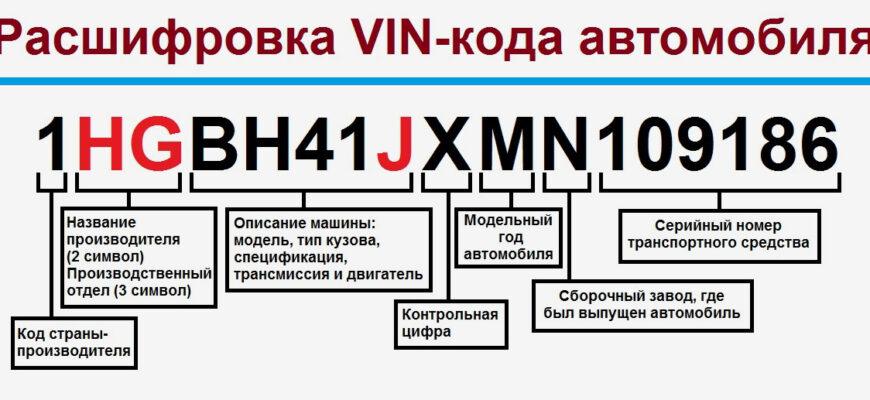
VIN (Vehicle Identification Number) is a unique vehicle identification number consisting of 17 characters. This combination of letters and numbers is assigned to each car during production and serves as its "passport". According to the international standard ISO 3779-1983, only Arabic numerals and Latin letters are used in the VIN, with the exception of the letters I, O and Q, which can be confused with the numbers 1 and 0 .
The VIN is divided into three main parts:
- WMI (World Manufacturers Identification) – the world index of the manufacturer, the first three characters.
- VDS (Vehicle Description Section) – descriptive part, from the 4th to the 9th character.
- VIS (Vehicle Identification Section) – distinguishing part, from the 10th to the 17th character .
How a VIN code helps to identify a car
The VIN code contains encoded information about the car manufacturer, its characteristics, year of manufacture, manufacturer and individual serial number. This allows you to uniquely identify each vehicle and track its history. The standardization of the VIN code makes it possible to check the history of the car in various databases around the world, which is especially important for imported cars .
Due to the uniqueness of the VIN, no two vehicles have the same ID. If two cars with an identical VIN are found, this is a clear sign that the number on one of them has been changed by intruders - "broken" .
Specifics of VIN Chinese brands (WMI codes)
Chinese cars have their own peculiarities in the structure of the VIN code, especially in terms of WMI. The set of characters from LA to LO indicates that the car was produced at a Chinese enterprise .For example, Haval cars start with the LGW prefix, indicating their Chinese origin .
In the international WMI classification, the letter L stands for China, and for Haval, the LGW code is a unique brand identifier .This is important to consider when verifying the authenticity of the VIN of a Chinese car. Other Chinese manufacturers use their own unique WMI codes, but they all start with the letter L according to the International Region Classification in the VIN system .
How to Read VIN on Your Own
The tenth digit is the year of issue
The tenth position in the VIN code contains information about the model year of the car. This information is coded in a certain way: for cars manufactured from 2010 to 2019, the letters A to K are used (excluding the letters I, O, and Q); for cars of 2020-2029 model years, letters from L to Y are used .
This information is critical when buying a car, as it allows you to check whether the year of manufacture declared by the seller corresponds to the real year encoded in the VIN .
WMI, VDS, VIS – Key Parts of a VIN
As already described, the VIN code is divided into three main parts:
WMI (first three characters):
- The first character indicates the manufacturer's geographic region (for example, L for China).
- The second symbol indicates the country in this region.
- The third character identifies a specific manufacturer or its division .
VDS (from the 4th to the 9th symbol):
- This part contains information about the characteristics of the vehicle: line, series, engine type, permissible maximum weight, type of braking system and passive safety system, chassis, cab and body type.
- The ninth character is a control character and is used to verify the authenticity of the VIN code .
VIS (from the 10th to the 17th symbol):
- The tenth character indicates the model year.
- The eleventh character indicates the manufacturer.
- From the 12th to the 17th character is the individual serial number of the car .
Understanding this structure allows you to independently decipher the basic data about the car even without special services.
Examples of decoding on popular models
Let's consider an example of decoding the VIN code of a Haval car:
VIN: LGW EE4A5 6M K123456
- LGW - Manufacturer code (Haval, China)
- EE4A5 is a descriptive part that contains information about the characteristics of the car
- 6 — control character
- M is the model year
- K is the plant code
- 123456 is the serial number of the vehicle
From this decryption, you can determine that we have a Haval car produced at a certain plant in China in a particular year. Such information helps to verify the data provided by the seller and identify possible inconsistencies.
Free Online VIN Checker Services
Criteria for choosing a reliable service
When choosing an online service to check the VIN of a Chinese car, there are a few key criteria to look out for. First, it is important to make sure that the service has access to the databases of Chinese manufacturers. Many international services specialize mainly in European, American and Japanese cars, having limited information about Chinese brands. Secondly, it is worth checking the relevance of the information provided - how often the databases are updated and what sources of information the service uses. Thirdly, an important factor is the reputation of the service - user reviews and time on the market can say a lot about its reliability .
Also pay attention to the list of information provided: high-quality services provide detailed data on the configuration, service history, participation in an accident, change of ownership and legal purity of the car.
Step-by-step instructions: how to get a report in a couple of clicks
The process of obtaining vehicle information through an online service is usually simple and intuitive:
- Go to the VIN code checker service of your choice, for example, on our website tao-bao.kz.
- Look for the VIN box, which is usually located on the homepage.
- Enter the 17-digit VIN of the vehicle being tested. Make sure that you enter all characters without mistakes and spaces.
- Click the "Check" button or similar.
- Depending on the service, you can get basic information right away or you will be asked to watch the demo version of the report before purchasing the full version.
- Review the information and save the report for future reference .
Some services also offer smartphone apps that allow you to quickly check the VIN right at the place of inspection of the car.
Limitations and hidden paid options in free checks
It is necessary to understand that "free" VIN verification services often have significant limitations. In most cases, only basic information is provided free of charge: make, model, year of manufacture and general characteristics of the car. For more detailed information about the accident, real mileage, service history and legal purity, you usually have to pay extra.
Some services use a "clickbait" model, where a free report shows hints of problems with the car, but a payment is required to obtain specific information. It is also important to consider that even paid services may not have full access to information about Chinese cars, especially if they have been imported recently or have a history of operation in China.
Before purchasing the full report, it is recommended to read the demo version and reviews of the service to assess the completeness and reliability of the information provided.
Checking the mileage history
Why mileage is one of the main indicators
The mileage of a car is one of the most important indicators of its condition and wear. The resource of most components and assemblies, including the engine, transmission, suspension and brake system, directly depends on the mileage. The higher the mileage, the higher the likelihood of an imminent expensive repair. Unfortunately, it is the mileage that most often becomes the object of falsification when selling used cars, including Chinese brands.
You should be especially careful with relatively new Chinese cars that show implausibly low mileage. Unlike European and Japanese cars, Chinese brands still have less data in international databases, which makes it difficult to check the mileage history.
Methods of verification of real mileage
There are several ways to check whether the claimed mileage corresponds to the real one:
- Compare data from different sources : check the service history in official service centers, where the mileage is recorded at each request.
- Physical inspection of the vehicle : wear of pedals, steering wheel, seats, sill trims must correspond to the declared mileage. For example, a heavily worn steering wheel with a mileage of less than 50,000 km should arouse suspicion.
- Checking the electronic control units : Modern cars store mileage information not only in the odometer, but also in various electronic units. Specialized diagnostics can identify inconsistencies.
- Analysis of the production date and average annual mileage : By dividing the mileage by the age of the car, you can get the average annual mileage. For passenger cars, 15,000-20,000 km per year is considered normal. A significantly smaller or larger indicator requires additional verification.
Tips: What to Look for in the Report
When analyzing your VIN verification report, pay close attention to the following points:
- Dynamics of mileage change : If a service history is available, see how the mileage has changed over time. Sudden jumps or a decrease in mileage are clear signs of manipulation.
- Matching mileage and vehicle condition : If a car with a declared mileage of 50,000 km requires major engine repairs or has badly worn interior elements, this is a reason to doubt the reliability of the odometer readings.
- History of use : information about how the car was used (personal, taxi, car sharing) can explain the increased wear and tear with a relatively low mileage.
- Regularity of maintenance : the lack of data on regular maintenance with significant mileage should alert you - this may indicate improper care of the car or twisted mileage.
Remember that even if the report does not reveal any obvious mileage problems, it is always advisable to have the car checked by a specialist before buying.
Checking the history of accidents and damage
How services collect information about accidents
Online services receive information about accidents and car damage from various sources. The main ones are the databases of the traffic police, insurance companies, official dealers and independent service stations. When a car gets into an accident, information about this is recorded in the traffic police report, if the participants contacted the police. If the repair was carried out under insurance, data on damage and work performed is stored in the database of the insurance company.
For Chinese cars, it is especially important to check information from the databases of official dealers, where there may be records of warranty repairs after accidents. However, it should be borne in mind that in case of minor accidents or repairs for cash in unofficial services, the information may not get into the databases.
Common "traps" of substituting history
Unscrupulous sellers use various ways to hide the real history of car damage:
- Repairs without contacting an insurance company : Damage is repaired in small workshops for cash, which leaves no trace in official databases.
- Use of "gray" customs clearance schemes : Some Chinese cars are imported into Kazakhstan under schemes in which information about the condition of the car in the country of origin remains unavailable to local databases.
- Car repainting : A high-quality repaint can hide the traces of serious damage to the body, especially during a superficial inspection.
- Forgery of documents : In some cases, sellers may provide a fake service book or inspection certificates without mentioning the damage.
- Concealment of information about flooding : This is especially true for cars from the southern regions of China, where floods occur. Traces of flooding can be carefully camouflaged.
Practical recommendations for assessing the severity of an accident
When you find information about accidents in the history of the car, it is important to correctly assess their seriousness:
- Analyze the nature of damage : Impacts to the front or rear of the car can lead to deformation of the load-bearing structure of the body, which is difficult to repair properly. Damage affecting the spars and load-bearing elements of the body is especially dangerous.
- Pay attention to the cost of repairs : If the cost of restoration work was more than 30% of the value of the car at the time of the accident, this usually indicates serious damage.
- Check if the airbags have deployed : The deployment of airbags usually indicates a strong impact, which could lead to hidden damage.
- Explore renovation locations : Repairs at an official service center using original parts are preferable to refurbishments at an unknown workshop.
- Conduct an independent technical examination : If the history of the car is in doubt, it is worth spending money on diagnosing the geometry of the body and checking the load-bearing elements with special equipment.
Remember that a car properly restored after a non-critical accident can serve no worse than a car that has not been in accidents, but the price of such a car should be correspondingly lower.
Search for service and repair data
Where do official and service data come from?
Information about car maintenance and repairs can be obtained from several sources. The main and most reliable source is the databases of official dealers and authorized service centers. When a car undergoes scheduled maintenance or repairs at an authorized dealer, all work and replaced parts are recorded in the manufacturer's centralized database.
For Chinese cars, especially new brands such as Haval, Geely or Changan, the information system may be less developed compared to European or Japanese brands, but most authorized dealers have already implemented digital service accounting systems. In addition, data can be stored in the databases of independent service stations that use specialized software to keep track of customers and services provided.
How to check the service book and actual repairs
Checking the service book and actual repairs requires an integrated approach:
- Examining the Paper Service Book : check for all scheduled maintenance marks, seals and signatures of service centers. The lack of regular maintenance marks is a bad sign.
- Request service history from an authorized dealer : if you have the VIN code of the car, you can contact the official dealer of the brand directly to obtain an extract from the database of the work performed.
- Check receipts and work orders : Ask the seller to provide all the documents about the repairs carried out and the parts replaced. This will help you assess how thoroughly the car has been maintained.
- Visual inspection : Some traces of repair can be found during a thorough inspection of the car. Pay attention to different shades of paint, uneven gaps between body parts, traces of sealant or welding.
- Computer diagnostics : Modern cars store a history of errors and malfunctions in electronic control units. Computer diagnostics can reveal recurring problems or traces of their elimination.
Key Points for Evaluating a "Fairer" Service
When analyzing the vehicle's service history, pay attention to the following aspects:
- Frequency of maintenance : For Chinese cars, the recommended interval is usually 10,000-15,000 km.
- Use of recommended oils and fluids : The quality of the consumables used directly affects the durability of the engine and transmission. Work orders must contain specific brands and specifications.
- Preventive substitutions : Timely replacement of belts, rollers, pumps and other parts with a limited resource indicates a responsible approach to maintenance.
- Compliance of work with mileage : Some repairs are usually required after a certain mileage. For example, if the clutch has already been changed or the gearbox has been repaired with a low mileage, this may indicate careless operation.
- Solving recall campaigns : Check if all the recall campaigns announced by the manufacturer have been carried out. Ignoring reviews may indicate a negligent attitude to the technical condition of the car.
A car with a complete and transparent service history is preferable even with a slightly higher mileage than a car with a dubious history and allegedly low mileage.
Additional checks before buying
Visual inspection of the body and interior
In addition to checking by VIN code, it is necessary to conduct a thorough visual inspection of the car:
- Body : check the uniformity of the gaps between the body panels, the absence of traces of corrosion, especially in hidden places (sills, bottom, wheel arches). Pay attention to the shades of paint - they should be the same on all body elements.
- Glass : All glazing shall bear the same marking indicating the year of manufacture. Different markings may indicate a replacement after an accident.
- Salon : Assess the condition of the seats, steering wheel, pedals, buttons and switches. Wear and tear must correspond to the declared mileage. Check the operation of all electronic systems, including air conditioning, multimedia, navigation.
- Trunk and engine compartment : Inspect for traces of repair, abnormal fasteners, rust or leaks of technical fluids.
- Car underbody : If possible, check the condition of the underbody, especially for signs of corrosion, damage to the crankcase protection or traces of unqualified repairs.
Test drive: what to check under the hood and in the cabin
A test drive is an essential part of the process of buying a used car:
- Cold start check : observe the behavior of the engine when starting after a long parking. The engine should start easily, without extraneous noise and vibrations.
- Idling : after warming up, the engine should work smoothly, without dips and increased rpm.
- Acceleration and braking : evaluate the dynamics of acceleration, the absence of jerks, twitches when changing gears. The brakes must work effectively, without drifting to the side.
- Behavior on bumps : listen to extraneous noises, knocks and squeaks in the suspension when driving through bumps.
- Transmission Operation : For an automatic transmission, check for smooth shifting and no slippage. For mechanical - ease of gearing and clutch operation.
- Electronic Systems : While driving, check the operation of all safety systems, including ABS, ESP, directional stability system.
- Climate control : make sure that the air conditioner effectively cools the cabin, and the heater heats it well.
Checking customs restrictions and fines by VIN
Before buying a Chinese car, you need to make sure that it is legally clean:
- Customs history check : Make sure that the car has been officially cleared through customs and all the necessary duties have been paid. This is especially true for recently imported Chinese cars.
- Availability of collateral and restrictions : Check if the car is pledged to a bank or leasing company. The purchase of such a car may lead to its seizure in favor of the creditor.
- Check for fines : Make sure there are no unpaid fines that will pass to the new owner after purchase.
- Cases : Check if the car is the subject of litigation or enforcement proceedings.
- Theft and search : Make sure that the vehicle is not listed in the stolen vehicle databases.
The legal purity of the car is as important as its technical condition. Even if the car is in excellent condition, but has legal problems, its purchase can lead to significant financial losses and legal difficulties.
Conclusion & Practical Guide
"Minimum action" algorithm for a safe purchase
To safely buy a used Chinese car, it is recommended to follow the following algorithm of actions:
- Preliminary check by VIN code : Prior to inspecting the vehicle in person, perform a VIN check using our tao-bao.kz service or other available resources.
- Analysis of the information obtained : Carefully study the data on mileage, accidents, maintenance and legal status of the car. If serious problems are detected, it is better to refuse the examination and save time.
- Personal inspection : If the preliminary check does not reveal any problems, arrange an appointment to inspect the car. It is advisable to conduct the inspection in daylight and in dry weather.
- Test drive : Be sure to conduct a test drive, including driving in various modes: city, highway, rough roads.
- Professional diagnostics : If you are serious about buying, carry out diagnostics in a specialized service center or with an independent expert.
- Verification of documents : carefully study all the documents for the car, including the title deed, STS, service book, customs documents.
- Drawing up a purchase and sale agreement : Include in the contract all important details about the car and its condition, as well as the seller's responsibility for hidden defects.
Short VIN Check Checklist
Before buying a Chinese car, use this checklist to check by VIN code:
- VIN validation (17 characters, structure-conforming)
- WMI compliance with the declared brand and country of manufacture
- Checking the year of manufacture by the 10th position of the VIN
- Check your mileage history and identify signs of odometer torsion
- Information about accidents, their seriousness and the quality of restoration repairs
- Service history and service intervals
- Checking for deposits, restrictions, fines
- Customs history check (for imported vehicles)
- Compliance of the configuration specified in the VIN with the actual configuration
- Review and execute recall campaigns
Call to Action: Use our free online service
Buying a used Chinese car doesn't have to be a lottery! Our free online service on the tao-bao.kz website allows you to quickly and reliably check the history of any Chinese car by VIN code. We provide up-to-date information from official sources, which helps to avoid unpleasant surprises after the purchase.
Simply enter the 17-digit VIN of the vehicle you are interested in in the search box on our website and get a detailed report of its history. We are constantly expanding the database and improving the verification algorithms to provide you with the most complete information about even the newest models of Chinese cars.
Don't risk your money – take a few minutes to check your car right now and make an informed purchase decision. Remember: Proper pre-purchase verification will save you months of headaches and unexpected expenses down the road!