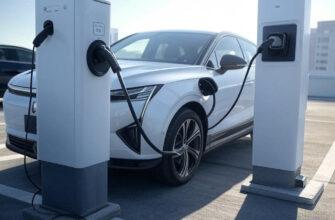
Advantages of BYD charging systems compared to competitors
Chinese auto giant BYD has made a technological breakthrough in the field of electric vehicle charging, introducing solutions that radically change the perception of the speed and efficiency of energy refueling. The new Super e-Platform with megawatt charging stations demonstrates a fundamentally different approach to electric vehicle infrastructure, offering benefits unattainable by most competitors, including Tesla .
Revolutionary charging speed
BYD's main competitive advantage lies in its unparalleled range replenishment speed. Super e-Platform technology delivers power 1000 kW (1 MW) , which allows you to restore 400 km of mileage in 5 minutes .This is in 2 times more capacity fastest charging stations Tesla Supercharger V4 (500 kW) and in 3-4 times Faster than the previous generation Chargers .For comparison:
-
Tesla Supercharger V4: 275 km in 15 minutes
-
Li Auto Mega MPV: 490 km in 12 minutes
-
Zeekr: 80% charge in 10 minutes
This speed is achieved thanks to a unique combination of:
-
Batteries with a multiplier of 10C capable of receiving a current 10 times their capacity
-
1000V high-voltage architecture with a peak voltage of 1500V
Silicon-carbide power chips , reducing energy losses by 70%
Integration with power systems
BYD solves the key problem of high-power charging - the load on the power grid. Each station is equipped with built-in energy storage That:
-
Gradually charged from the mains during periods of low demand
-
Instantly release stored energy when the vehicle is connected
-
Reduce peak load by 40-60% compared to traditional DC stations
This solution is especially relevant for regions with weak energy infrastructure, allowing you to deploy ultra-fast charging without upgrading networks .
Technological synergy of components
The advantages of BYD are provided by the deep integration of all elements of an electric vehicle:
-
Engines with a capacity of 789 hp up to 30,511 rpm
-
Silicon carbide power electronics operating at 1000V
-
Software algorithms Dynamic battery temperature management
-
Unified 1000V Architecture for the entire model range
This integration allows the Han L sedan to accelerate to 100 km/h in 2.7 seconds with a weight of 2.5 tons, while maintaining the ability to charge instantly .
Infrastructure Comparisons
| Parameter | BYD Super e-Platform | Tesla Supercharger V4 | Li Auto Mega MPV |
|---|---|---|---|
| Max. power | 1000 kW | 500 kW | 600 kW |
| Charging time (400 km) | 5 min | 15 min | 12 min |
| Voltage | 1000V | 800V | 800V |
| Installation Cost | $180,000 | $250,000 | $200,000 |
| Energy Storage | Embedded | No | Optional |
Data shows that BYD not only outperforms competitors in terms of speed, but also offers a more cost-effective solution due to the modular design of the stations .
Economic and market consequences
The introduction of Super e-Platform technology has already led to:
-
BYD's market cap in $162 billion , exceeding the combined value of Ford, GM and Volkswagen
-
Growth in exports of electric vehicles from China by 50%in 2023
-
The fall in Tesla shares by 4%after the announcement of the technology
By 2026, BYD's share of the global fast charging market is projected to reach 35%against 25%Tesla .
Safety and durability
Unlike competitors using NCM/NCA chemistry, BYD remains focused on LFP batteries (lithium iron phosphate) with:
-
Service life of 1 million km
Temperature stability up to 800°C
Zero risk of thermal runaway
These characteristics are especially important for megawatt chargers, where traditional batteries are prone to degradation .
Development prospects
BYD's plans include:
-
Deployment 4000 stations in China until 2026
Export of technology to Europe and the United States through joint ventures
-
Integration of charging stations with V2G (Vehicle-to-Grid) systems
These moves could make BYD not only a leader in the production of electric vehicles, but also a key player in the energy sector .
Conclusion
BYD's charging technologies set a new industry standard by combining unprecedented speed with cost-effectiveness and safety. While competitors are focused on increasing battery capacity, BYD is rethinking the entire power supply chain of electric vehicles - from power electronics to infrastructure. This allows the company not only to dominate the domestic market, but also creates the prerequisites for a global reformatting of the industry .