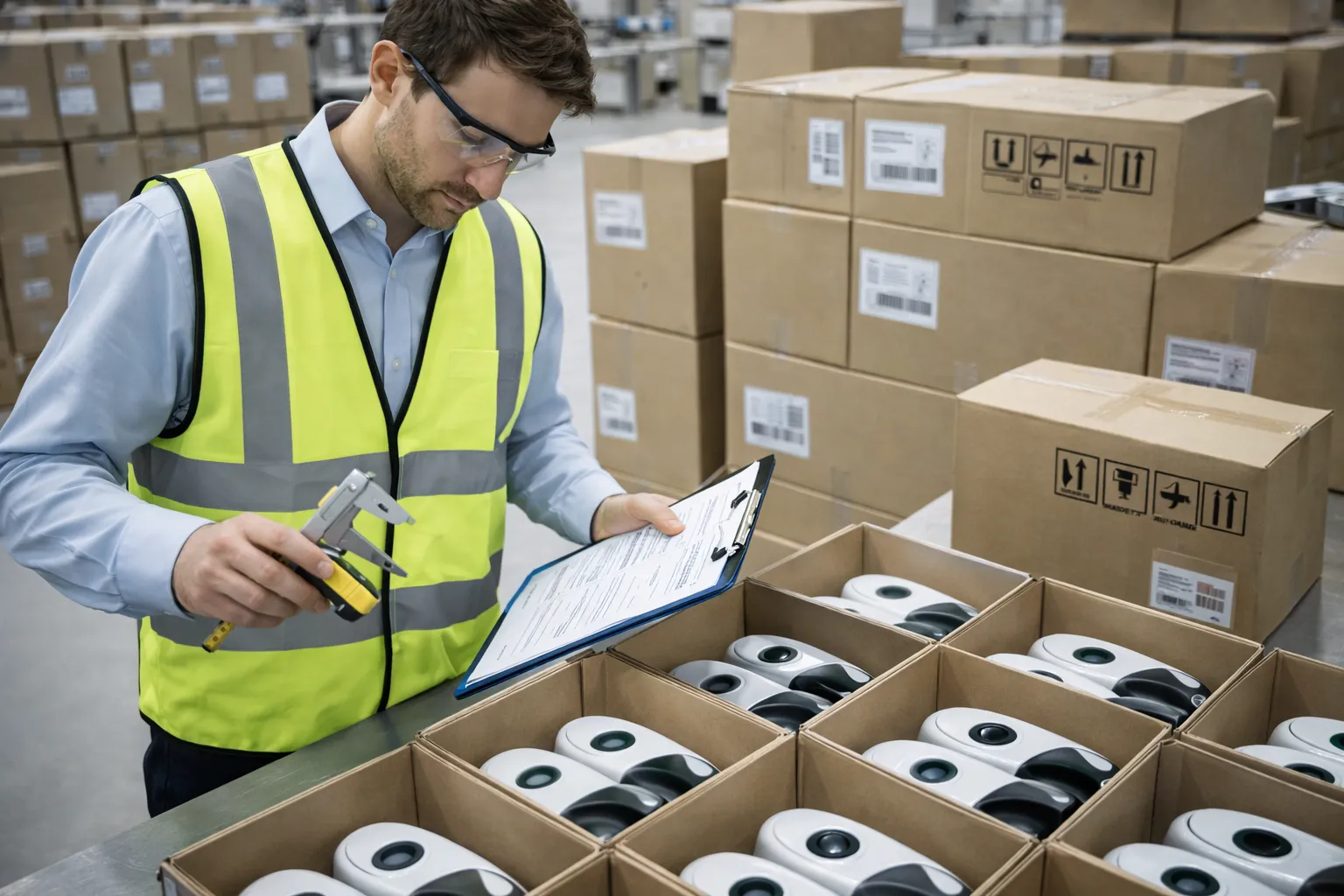
In international trade, you get what you inspect, not what you expect. A Pre-Shipment Inspection (PSI) is the final and most critical firewall between a factory’s production line and your warehouse. Once the container doors close and the seal is locked, your leverage with the supplier drops to zero.
For importers, Amazon sellers, and sourcing managers, a PSI is not just a “quality check”-it is a financial safety mechanism. It protects your deposit, prevents the shipment of unsellable goods, and ensures compliance with retailer standards.
This guide provides a definitive operational framework for conducting PSIs, from AQL sampling to the pass/fail decision.
What Is a Pre-Shipment Inspection?
A Pre-Shipment Inspection (PSI)-also known as a Final Random Inspection (FRI)-is a systematic quality control procedure conducted when production is at least 80% complete and packed.
The 80/20 Rule
Why 80%? If you inspect too early (e.g., 50% packed), the factory can hide bad units in the unpacked pile. At 80% packed, the inspector can pull random cartons from the entire lot, making it statistically impossible for the factory to “cherry-pick” good units.
What PSI Can and Cannot Guarantee
| PSI Can… | PSI Cannot… |
|---|---|
| Verify the average quality of the batch using statistics. | Guarantee 0% defects (unless you pay for 100% inspection). |
| Catch major issues (wrong color, broken function). | Find hidden chemical issues (requires lab testing). |
| Force the factory to rework goods before shipping. | Fix the root cause of the defect (that’s engineering). |
Why Pre-Shipment Inspections Matter
- Reduce Defect Risk: Finding a 10% defect rate in China costs $0 to fix (factory reworks it). Finding it in the USA costs thousands in returns and lost brand equity.
- Protect Payment: Most Letters of Credit (LC) and T/T terms require a “Passed Inspection Report” before the final 70% balance is released.
- Avoid Returns: For Amazon sellers, a high return rate leads to listing suspension. PSI prevents this.
- Shipment Approval Gate: It gives you a hard data point to say “Yes, ship it” or “No, fix it.”
Pre-Shipment Inspection vs Other Inspections
Don’t confuse PSI with other QC steps.
| Inspection Type | Timing | Purpose | Risk Mitigation |
|---|---|---|---|
| PPI (Pre-Production) | Before production starts. | Check raw materials & components. | Prevents use of cheap materials. |
| DPI (During Production) | 20-50% produced. | Catch systemic errors early. | Avoids delays; fixes issues while line is running. |
| PSI (Pre-Shipment) | 80-100% packed. | Final acceptance of the lot. | Prevents shipping bad goods. |
| CLS (Container Loading) | During loading. | Quantity & carton condition check. | Prevents swapping goods; verifies count. |
Pre-Shipment Inspection Process (Step-by-Step)
1. Inspection Booking
You (or your QC provider) notify the factory 1 week in advance.
- Tip: Do not let the factory pick the date alone. Set a date that allows 2-3 days for rework before the “Ex-Factory” date.
2. Factory Readiness Confirmation
The factory must confirm goods are 80% packed. If the inspector arrives and only 50% is ready, it’s an “Aborted Inspection” (you still pay).
3. Sampling Selection (AQL)
The inspector calculates the sample size based on the total order quantity (e.g., for 5,000 units, check 200).
4. Carton Pulling
The inspector goes to the warehouse and randomly selects cartons from the top, middle, and bottom of pallets. This is critical for randomness.
5. The Inspection (Visual, Measure, Function)
The inspector opens the cartons and checks the goods against your inspection checklist.
6. Report Generation
A draft report is often issued same-day, with a final PDF within 24 hours.
AQL Sampling Explained for PSI
Inspectors don’t check every unit. They use AQL (Acceptable Quality Limit)-a statistical standard (ISO 2859-1) to determine pass/fail.
How to Read AQL
- Lot Size: Total quantity (e.g., 3,000 widgets).
- Inspection Level: Usually Level II (Standard).
- Sample Size: For 3,000 units, the table says inspect 125 units.
Defect Thresholds (Standard Limits)
- Critical (0 allowed): Dangerous (sharp edge) or illegal.
- Major (2.5% allowed): Unsellable product (broken function, wrong color).
- Minor (4.0% allowed): Saleable but imperfect (loose thread, dirty mark).
Example: In a sample of 125, if you find > 7 Major defects, the whole shipment fails.
Complete Pre-Shipment Inspection Checklist
Give this to your inspection provider.
1. Quantity & Assortment
- Count total cartons packed.
- Verify assortment (e.g., 100 Red, 100 Blue).
- Check inner pack quantity (e.g., 6 units per inner box).
2. Visual Quality (Workmanship)
- Cleanliness: No oil, dust, glue, or fingerprints.
- Finish: No scratches, dents, or painting defects.
- Assembly: No gaps > 1mm between parts.
- Textiles: No loose threads, skipped stitches, or holes.
3. Measurements
- Product Dimensions (L x W x H) vs Spec Sheet.
- Product Weight (grams).
- Cable length / Fabric weight (GSM).
4. Function & Safety
- Function: Unit powers on/off? Buttons click? Zippers slide?
- Moving Parts: Wheels spin freely? Hinges open 180 degrees?
- Safety: No sharp edges? Battery compartment locked?
- Tests: Hi-Pot test (electronics), Needle check (textiles), Smell test.
5. Packaging & Labeling
- Barcode: Scans correct SKU? (Inspector must use a scanner).
- Labels: “Made in China” present? Warning labels (suffocation) present?
- Manual: Correct language and version?
- Accessories: All cables/screws included?
6. Carton Checks
- Drop Test: Drop a full carton 10 times from 30 inches. Check for damage inside.
- Shipping Marks: Correct PO#, Net/Gross Weight, Carton #.
- Carton Quality: Double-wall corrugated (5-ply) used?
What a Pre-Shipment Inspection Report Includes
A professional report should answer these questions:
- Result: PASS / FAIL / PENDING.
- Defect List: A breakdown of every defect found (e.g., “5 units with scratch”).
- Photos: High-res photos of the product, defects, barcode, and packaging.
- Measurement Table: Actual measurements vs. tolerance.
- Inspector’s Remarks: “Factory did not have a scale” or “Goods were stored in humid area.”
How to Prepare for a Pre-Shipment Inspection
For Buyers (You)
- Approve a Golden Sample: Send a signed, perfect sample to the factory for the inspector to compare.
- Send the Spec Sheet: Dimensions, Pantone colors, materials.
- Define Tolerances: “Weight +/- 5g is acceptable.”
For Factories (Supplier)
- Finish Production: Ensure goods are 100% made and >80% packed.
- Prepare Equipment: Have scales, scanners, and rulers ready for the inspector.
- Assign QA Staff: Have someone assist the inspector (opening boxes).
What Happens If PSI Fails
Do not ship the goods.
- Hold Payment: Do not release the final balance.
- Demand Rework: Require the factory to fix the defects (e.g., clean the stains, replace the screws).
- Re-Inspection: Hire the inspector again to verify the fix. The factory should pay for this.
Common Mistakes in Pre-Shipment Inspection
- Booking Too Early: Inspecting when only 20% is packed is a waste of money (it’s a DPI, not a PSI).
- No Checklist: Relying on the inspector’s “general knowledge” instead of your specific requirements.
- Unclear Tolerances: Failing a batch for a 1mm size difference because you didn’t specify “+/- 2mm.”
- Ignoring Packaging: The product is perfect, but the retail box is crushed because the shipping carton was cheap.
PSI for Different Product Types
- Textiles: Focus on measurements (sizing), stitching, and fabric flaws.
- Electronics: Focus on function (power on), safety (Hi-Pot), and accessories.
- Toys: Focus on safety (small parts cylinder, sharp points) and labeling.
- Furniture: Focus on assembly (does it fit together?), moisture content, and stability.
How to Choose a Pre-Shipment Inspection Provider
| Criteria | Good Provider | Red Flag |
|---|---|---|
| Independence | Rotates inspectors to prevent bribery. | Sends same inspector every time (he becomes “friends” with factory). |
| Report Speed | Same-day or 24-hour turnaround. | 3-4 days to get report. |
| Expertise | Has specialists for your product type. | “Generalist” inspector checking complex electronics. |
| Platform | Online booking & report dashboard. | Email-only booking. |
FAQ
What is a pre-shipment inspection?
A quality control check performed on a statistically random sample of goods when production is at least 80% packed.
When should PSI be done?
At least 3-5 days before the “Ex-Factory” date (when the truck picks up the goods).
Who pays for PSI?
Usually the buyer pays ($200-$300 per man-day). If the inspection fails, the factory often pays for the re-inspection.
Is PSI mandatory?
No, but it is highly recommended for all imports >$5,000. Some countries (e.g., Saudi Arabia, Nigeria) require a specific “Certificate of Conformity” based on PSI.
What if PSI fails?
You reject the shipment. Discuss with the supplier: can it be reworked? If not, do you cancel the order or negotiate a discount (for Minor defects)?
Can PSI replace lab testing?
No. PSI checks visible/functional quality. It cannot check for lead paint, chemical composition, or material purity.
What is the difference between Major and Minor defects?
Major makes the product unsellable (returns). Minor is a quality flaw but the customer might still keep it.
Quick PSI Checklist (Printable Summary)
- Status: 80% Packed?
- Qty: Matches PO?
- Style: Correct Color/SKU?
- Workmanship: Clean & Undamaged?
- Function: Works as intended?
- Data: Barcode scans?
- Pack: Carton drop test passed?
- Result: Within AQL limits?