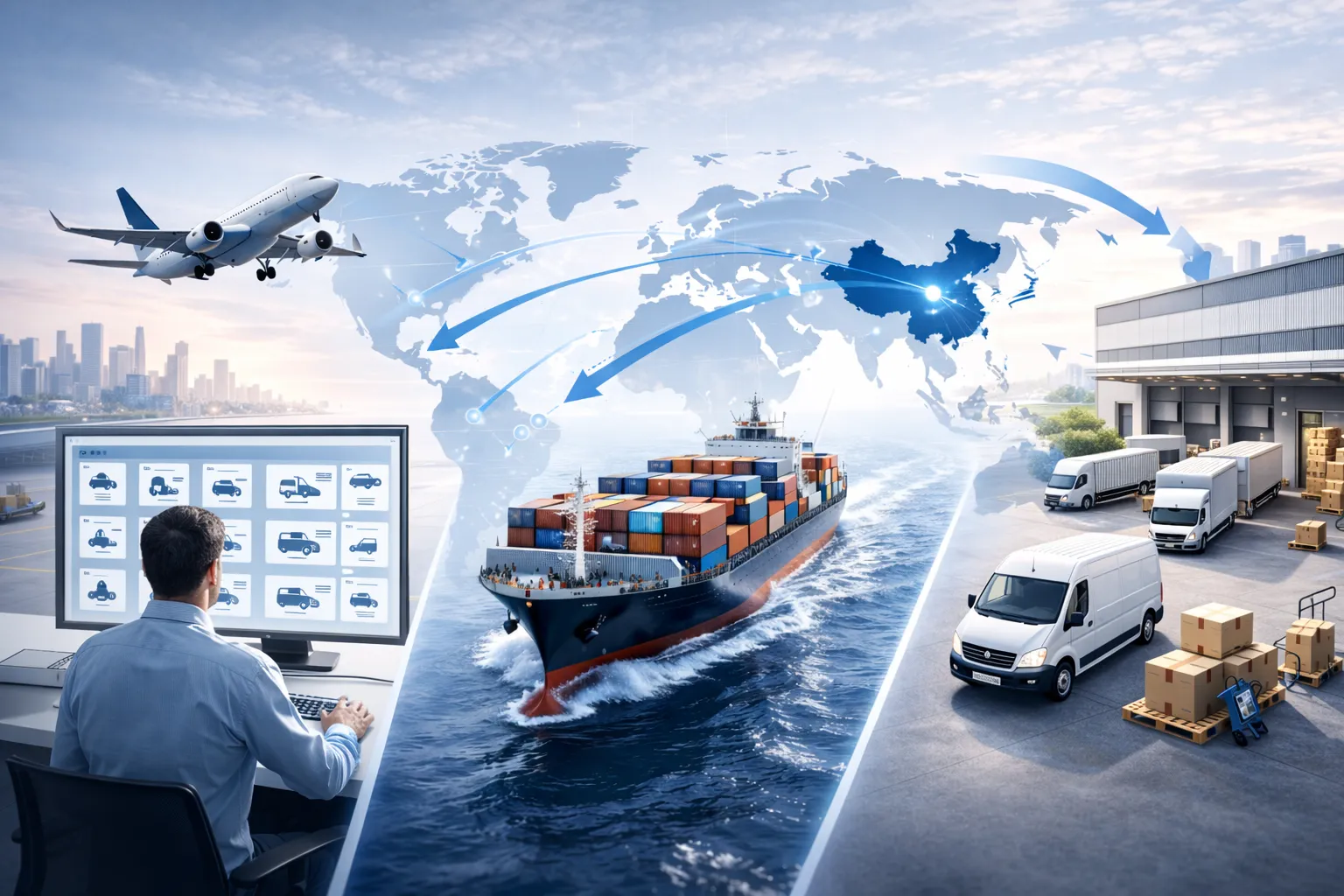
Choosing a shipping partner is the single most critical decision in your supply chain. A good forwarder is an invisible engine that keeps your inventory stocked and your costs predictable. A bad one is a black hole of hidden fees, missed customs filings, and silence when your container gets stuck in Long Beach.
If you search for “best shipping companies,” you will mostly find paid directories and ads. This guide is different. It provides an operational framework to vet, score, and select a logistics partner based on your specific business needs-whether you are dropshipping 50 packets a day or moving 50 containers a year.
Quick Answer: What “Best” Means (For Your Shipment)
There is no single “best” company. The partner that is perfect for shipping an iPhone by air is likely terrible for shipping a sofa by sea.
- Best for Speed: Express Integrators (DHL/UPS/FedEx).
- Best for Cost (Volume): Global Freight Forwarders consolidating LCL/FCL.
- Best for Amazon FBA: Specialized “FBA Prep” forwarders who understand appointment slots and labeling.
- Best for Compliance: Partners with in-house customs brokerage.
Summary: The 6 Rules of Selection
- Fastest: Air Express (Courier).
- Cheapest: Sea Freight (FCL) booked via a forwarder.
- Most Predictable: Forwarders with digital tracking dashboards.
- Best for Small Parcels: Dedicated e-commerce lines (e.g., Yanwen, 4PX).
- Best for Heavy/Bulky: Traditional NVOCCs.
- Best for Beginners: DDP services where the forwarder handles duties and delivery.
First: Identify What You Actually Need (Decision Tree)
Before you email a random company, define your profile.
Parcel vs. Freight (B2C vs. B2B)
- Parcel (B2C): You ship single items directly to consumers. You need a 3PL or Courier (e.g., YunExpress). A freight forwarder will not talk to you.
- Freight (B2B): You ship boxes/pallets to a warehouse. You need a Freight Forwarder.
Air vs. Ocean vs. Express
- Express: < 150 kg, urgent (3–5 days).
- Air Freight: > 150 kg, urgent (5–10 days).
- Ocean: > 1 CBM, not urgent (25–45 days).
Door-to-Door vs. Port-to-Port
- Door-to-Door (DDP/DDU): You want the forwarder to handle trucking at both ends. Ideal for most SMEs.
- Port-to-Port: You have your own trucker and customs broker in the US. Ideal for large enterprises.
Shipping Line vs. Freight Forwarder
- Shipping Line (Carrier): Owns the boat (Maersk, COSCO). They rarely deal with small businesses directly.
- Freight Forwarder: Doesn’t own the boat. They buy space in bulk from the carrier and resell it to you with service (docs, trucking). You almost certainly need a forwarder.
Types of “Shipping Companies” From China
| Type | Examples (Illustrative) | What They Do | Pros / Cons |
|---|---|---|---|
| Global Freight Forwarders | Flexport, Kuehne+Nagel, DHL Global Forwarding | End-to-end logistics for B2B. | Pro: Reliability, software. Con: Expensive for small shipments. |
| Local Chinese Forwarders | Sino Shipping, DFH, Bansar | Local expertise, aggressive rates. | Pro: Cheaper, flexible. Con: Variable service quality. |
| NVOCCs | (Many act as both) | Ocean specialists who issue their own Bill of Lading. | Pro: Direct carrier contracts. Con: Less focus on air/parcel. |
| Express Integrators | DHL, FedEx, UPS | Air courier service. | Pro: Fast, trusted. Con: Extremely expensive for heavy cargo. |
| E-commerce 3PLs | 4PX, YunExpress, CNE | Small parcel consolidation for dropshipping. | Pro: Cheap for < 2kg. Con: Slow, poor tracking. |
The Scoring Rubric: How to Compare Companies
Don’t just look at the price. Score your top 3 quotes on this 5-point scale.
| Criterion | Weight | What to Look For (Score 5/5) |
|---|---|---|
| Responsiveness | High | Replied within 24h with a custom question (not generic template). |
| Price Transparency | High | Quote breaks down ocean freight, local charges, and delivery fees. No “All-In” mystery numbers. |
| Service Coverage | Med | Has their own office or verified agent in your destination city. |
| Expertise | Med | Asked about your commodity (HS code, batteries) before quoting. |
| Technology | Low | Has a portal to track shipments (nice to have, but email works). |
Winner: The company with the highest score, not necessarily the cheapest price.
Vetting Checklist (Practical, Non-Legal)
Before you wire money, run this check.
- Business License: Ask for their Chinese Business License (营业执照). Verify the name matches the bank account.
- NVOCC License: If shipping sea freight, ask for their NVOCC certificate number (registered with the Ministry of Transport).
- Physical Address: Search their office address on Baidu Maps. Does it look like an office building or a residential block?
- Destination Agent: Ask: “Who handles the US/EU customs clearance and delivery?” If they refuse to name the partner, run.
- References: Ask: “Have you shipped [My Product] to [My City] recently? Can I see a redacted Bill of Lading?”
- Security Verification: When browsing directories like Alibaba or Freightos, look for the “Verified” or “Check” badge, indicating the platform has performed security verification on the supplier’s legal status.
RFQ Template (Copy/Paste)
Send this to 3–5 forwarders to get comparable quotes.
Subject: RFQ: [Commodity] from [Origin City] to [Destination ZIP] – [Ready Date]
Hi Team,
Please provide a quote for the following shipment:
- Incoterms: FOB [Port Name] (or EXW [Factory Address])
- Destination: Door delivery to [Zip Code], [Commercial/Residential/FBA?]
- Commodity: [Name], [HS Code if known]
- Cargo Details: [Number] Cartons, [Total Weight] kg, [Total Volume] CBM
- Dimensions: [L x W x H cm per carton]
- Ready Date: [Date]
- Special Requirements: [e.g., Do you handle customs? Do you offer insurance?]
Please break down the costs (Freight, Customs, Trucking).
Thanks,
[Your Name]
Red Flags (The Expensive Mistakes)
- The “All-In” Mystery Quote: “Shipping is $500 total.” (They will hit you with $1,000 in destination fees later). Always ask for a breakdown.
- The “Too Cheap” Transit Time: “Sea freight to NY in 12 days.” (Impossible. The boat takes 30 days. They are lying).
- Personal Bank Accounts: Never wire money to a personal name. Only corporate accounts.
- Refusal to Issue Bill of Lading: If they won’t give you the Master B/L (MBL) or House B/L (HBL), they are holding your cargo hostage.
- Pushing CIF Terms: If they insist you let the supplier handle shipping (CIF), you will likely be overcharged at the destination port.
Shortlist by Scenario (Curated Categories)
Note: These are examples of types of partners or well-known names. Always verify current service levels.
1. Small Parcels (B2C / Dropshipping)
- Recommended: Dedicated Parcel Lines (e.g., YunExpress, 4PX, Yanwen).
- Why: They bulk-ship thousands of parcels and inject them into USPS/Royal Mail. Faster than China Post, cheaper than DHL.
2. Urgent Restock (Air Freight > 100kg)
- Recommended: Mid-sized Local Forwarders (e.g., DFH, Bansar) or Digital Forwarders (e.g., Flexport, Freightos marketplace).
- Why: You need responsiveness. Digital platforms give instant quotes; local forwarders negotiate better spot rates.
3. Bulky / Low Value (Ocean Freight)
- Recommended: Traditional NVOCCs (e.g., Sino Shipping, Kuehne+Nagel for large volume).
- Why: You need the lowest cost per CBM. Large NVOCCs have the best contracts with carriers like COSCO/Maersk.
4. Amazon FBA Inbound
- Recommended: FBA Specialists (e.g., Unicargo, Freightos).
- Why: They know Amazon’s strict palletizing rules and have booking slots for fulfillment centers (e.g., ONT8, FTW1).
Common FAQs
What is the best shipping company in China?
There isn’t one. For air express, DHL is top-tier. For ocean freight, large forwarders like Kuehne+Nagel are reliable, but local Chinese forwarders often offer better rates and service for SMEs.
Should I use a freight forwarder or book directly?
Use a forwarder. Booking directly with a carrier (e.g., Maersk) requires massive volume. Forwarders act as your travel agent and handle the complexity.
How do I avoid hidden charges?
Request a “DDP” (Delivered Duty Paid) or “DDU” (Delivered Duty Unpaid) quote that explicitly includes all origin and destination charges. Ask specifically about “Destination Terminal Handling Charges” (DTHC).
What documents will I need?
At minimum: Commercial Invoice, Packing List, and Bill of Lading. For US imports, you also need the ISF filing (sea freight) and a Customs Bond.
How do I handle a customs delay?
Your forwarder/broker handles it. Your job is to provide the requested documents (invoice, product specs) immediately. You cannot “call” customs yourself.
Key Takeaways
- Define Your Lane: Don’t look for a “good forwarder.” Look for a “good forwarder for Electronics from Shenzhen to LA.”
- Vet the Agent: The person picking up the phone matters more than the logo. Good communication saves shipments.
- Avoid CIF: Control your own shipping by buying FOB.
- Test Small: Send a trial shipment (e.g., 100kg) before trusting them with a full container.
- Verification Successful: If you follow the vetting checklist (license, references, address), you dramatically reduce the risk of scams.
- Pay for Expertise: The cheapest forwarder often costs you the most in delays and fines. Pay a fair market rate for peace of mind.